Why More.NET Developers Are Questioning Clean Architecture?
Clean Architecture has long been considered a practice in.NET development.. Many developers are now asking if its benefits always justify the added complexity.
Admin
Part of series
Pragmatic .NET Architecture — Part 1
Why More .NET Developers Are Questioning Clean Architecture
If you've spent any time in the .NET world, you've probably come across Clean Architecture.
It's often touted as the way to build .NET applications that are easy to maintain, scale, and test. Many developers recommend using layers, repositories, interfaces, and strict separation of concerns.
Lately, however, more and more developers are asking a simple question:
Are we solving real problems with Clean Architecture, or are we just making more work for ourselves?
The Repository Pattern Debate
One of the biggest topics of discussion is the Repository Pattern in .NET.
Entity Framework Core already provides powerful abstractions through DbContext and DbSet. Yet many .NET applications introduce another repository layer on top of EF Core.
The goal is usually to improve testability and reduce coupling. In practice, though, this extra layer often becomes a collection of wrapper methods that simply pass calls through to EF Core.
Many developers argue that this additional abstraction can hide useful EF Core features, increase maintenance overhead, and make the codebase more difficult to navigate.
Testing Has Changed
Clean Architecture became popular partly because it made unit testing easier.
By abstracting dependencies behind interfaces, developers could mock databases, services, and external systems. Today, however, tools like Testcontainers have made integration testing significantly easier.
Many teams now find that tests validating actual application behavior provide more confidence than tests that merely verify mocked interactions.
The Reality of Enterprise Development
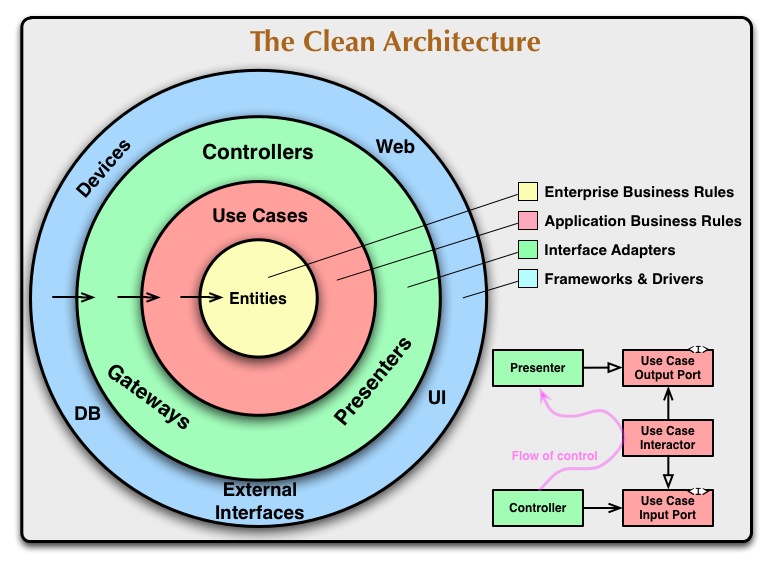
Architecture diagrams often look neat and elegant.
Real-world .NET projects rarely do.
Deadlines, legacy systems, performance requirements, third-party integrations, and constantly changing business needs force teams to make compromises. The architecture that ends up in production is often very different from the idealized version shown in presentations and diagrams.
This doesn't mean architectural principles are wrong. It simply means that practicality often wins over purity.
So, Is Clean Architecture Worth It?
The answer is the same one developers hate hearing:
It depends.
For large .NET systems with multiple teams, long lifecycles, and evolving infrastructure, Clean Architecture can provide valuable boundaries, flexibility, and maintainability.
For smaller applications, internal tools, and straightforward business systems, those same abstractions may introduce complexity without delivering meaningful benefits.
Focus on Trade-Offs, Not Trends
The most important lesson from this debate is that architecture should be treated as a tool, not a rule.
Every layer, abstraction, interface, and pattern introduces complexity. The question isn't whether a pattern is popular. The question is whether it solves a problem your project actually has.
The best software teams don't follow architectural trends blindly. They understand the trade-offs, evaluate their requirements, and choose solutions that remain maintainable over time.
Sometimes the cleanest architecture isn't the one with the most layers.
Sometimes it's the one that gets out of the way and lets developers focus on solving business problems.